 USD
 GBP
 CAD
 TTD
 EUR
 CHF
 DOP
 SGD
 MKD
 AUD
 HUF
 NZD
 TWD
 BGN
 PLN
 RUB
 HKD
 MXN
 SEK
 THB
 CZK
 TRY
 MYR
 ZAR
 PKR
 JPY
 ILS
 NOK
 CLP
 IDR
 PHP
 QAR
 AED
 KRW
 BRL
 GTQ
 SAR
 MAD
 UAH
 KWD
 VND
 LKR
 BMD
 ANG
 EGP
 BHD
 ARS
 ZMW
 COP
 AWG
 BZD
 DKK
 GYD
 ISK
 DJF
 BSD
 KES
 NIO
 NPR
 SRD
 MDL
 NGN
 BOB
 SZL
 BBD
 RSD
 FJD
 BDT
 SCR
 HNL
 CNY
 PEN
 MMK
 YER
 LAK
 OMR
 JMD
 KZT
 PGK
 MVR
 MGA
 MUR
 BWP
 KYD
 XPF
 KHR
 INR
 MWK
 MOP
 ETB
 PYG
 UGX
 GMD
 TZS
 SBD

Wheelchair Tire Numbers Explained
Wheelchair tire numbers can look confusing at first, especially when the same tire may have both an inch size and a metric size printed on the sidewall.
Learning how to read these numbers can make it much easier to identify the tire you have and compare it with a replacement. The most important thing is to match the tire to the correct wheel or rim rather than relying only on the general wheel size.
What You’ll Learn in This Guide
- Where to find the tire size on your wheelchair tire
- What inch sizes such as 24" x 1" or 24" x 1-3/8" mean
- How to read metric tire numbers such as 25-540 and 37-540
- What the first and second numbers in a metric tire size represent
- How common metric sizes compare with inch-size labels
- Why two tires labeled 24 inches may not fit the same wheel
- What to check before ordering a replacement wheelchair tire
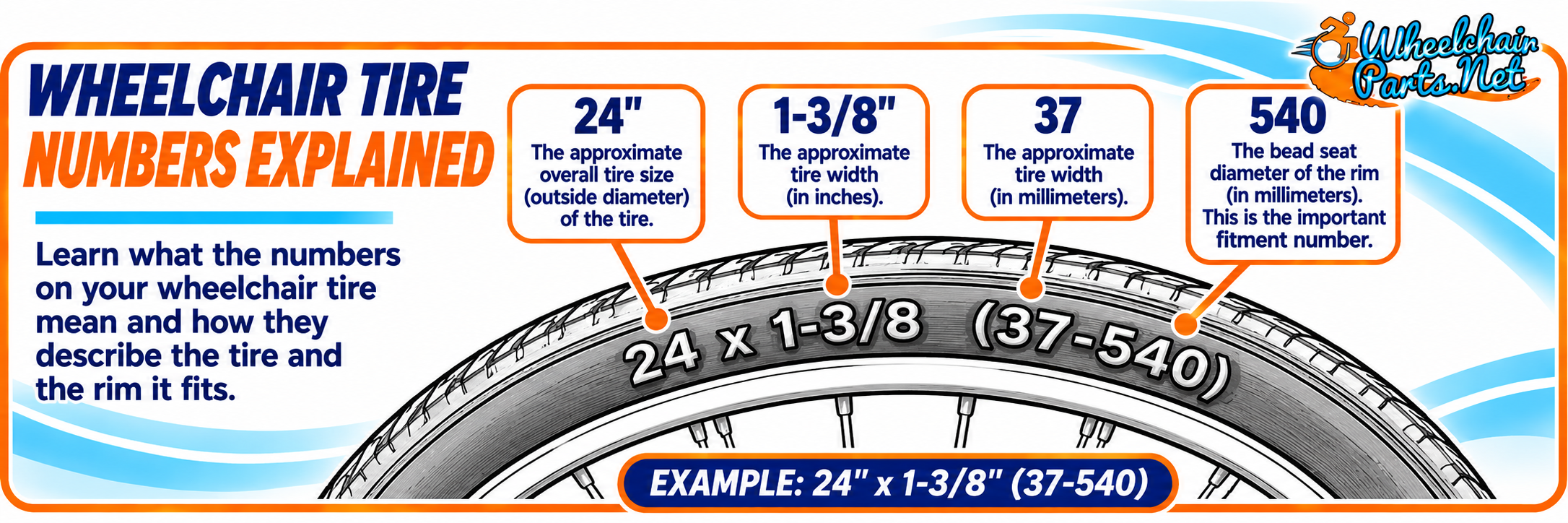
Where Do I Find My Tire Size?
Start by looking at the sidewall of your existing wheelchair tire.
Most tires have the size molded, printed, or stamped somewhere along the side of the tire. You may see an inch size, a metric size, or both.
For example, a tire may be marked:
24" x 1-3/8" 37-540
These two markings describe the same tire using different sizing systems.
Helpful Tip
If your tire still has readable numbers on the sidewall, take a clear photo before removing it. That information can be very helpful when comparing replacement tires.
Understanding Inch Tire Sizes
Wheelchair tires are often described using inch measurements such as:
- 24" x 1"
- 24" x 1-3/8"
- 24" x 2"
The first number generally refers to the approximate outside diameter of the tire, while the second number refers to the approximate tire width.
For example:
24" x 1"
Approximately a 24-inch tire with a 1-inch width.
24" x 1-3/8"
Approximately a 24-inch tire with a 1-3/8-inch width.
24" x 2"
Approximately a 24-inch tire with a 2-inch width.
These inch sizes are useful for describing the general tire size, but they should not be the only measurement used to determine fit.
Understanding Metric Tire Sizes
Many wheelchair tires also use a metric size written as two numbers separated by a dash.
Examples include:
- 25-540
- 37-540
- 50-540
This sizing system gives more specific information about the tire and the rim it is designed to fit.
Example: 37-540
37
The approximate tire width in millimeters.
540
The bead seat diameter of the rim in millimeters. This is the important fitment number that tells you which rim diameter the tire is designed to mount on.
So a 25-540 tire, a 37-540 tire, and a 50-540 tire all share the same 540 mm rim diameter, but they have different tire widths.
Quick Wheelchair Tire Size Conversion Guide
Wheelchair tires may be labeled with an inch size, a metric size, or both. The examples below show some common equivalent markings you may see when identifying wheelchair tires.
25-540 = 24" x 1"
37-540 = 24" x 1-3/8"
50-540 = 24" x 2"
25-559 = 25" x 1"
50-559 = 25" x 2"
25-590 = 26" x 1"
Important
Use this chart as a quick reference rather than a substitute for checking the complete tire size. Inch-size labels can vary between tire styles and manufacturers, so always match the metric rim-diameter number before ordering a replacement.
Why the Second Number Matters So Much
The second number in the metric size identifies the diameter of the rim where the tire bead sits.
This number needs to match the rim. A tire designed for a 540 mm rim cannot automatically be used on a different rim diameter just because both tires are described as 24-inch tires.
24 Inches Does Not Always Mean the Same Rim Size
The inch measurement is a general tire-size description. Different tires may use the same inch label while being designed for different rim diameters. Always compare the full tire size, especially the metric rim-diameter number, before ordering.
Real Wheelchair Tire Examples
Here are a few common examples of how the inch and metric numbers may appear together:
24" x 1" (25-540)
A narrower tire designed for a compatible 540 mm rim.
24" x 1-3/8" (37-540)
A wider tire that also fits a compatible 540 mm rim.
24" x 2" (50-540)
A much wider tire designed for a compatible 540 mm rim.
These examples show why the complete tire size matters instead of simply looking for a tire marked 24 inches.
What About Tire Width?
The first number in the metric size gives the approximate width of the tire.
For example:
- 25-540: approximately 25 mm wide
- 37-540: approximately 37 mm wide
- 50-540: approximately 50 mm wide
A wider tire may require more clearance around the wheelchair frame, wheel locks, side guards, and other nearby components.
Even when two tires use the same rim diameter, that does not automatically mean every width will work correctly on every wheelchair setup.
Do Not Rely Only on the Wheelchair Model
The same wheelchair model may have been sold with different wheel and tire configurations.
Replacement wheels may also have been installed at some point during the life of the chair.
Because of this, the size printed on the existing tire is often a better starting point than assuming a tire size based only on the wheelchair manufacturer or model.
Before Ordering a Replacement Tire
Before choosing a replacement wheelchair tire, check:
- The complete size printed on the existing tire
- The inch size
- The metric tire size
- The rim diameter number
- The tire width
- Whether the tire is pneumatic, solid, or another type
- Whether the wheelchair has enough clearance for the tire width
- Whether an inner tube is required
Quick Tire Size Checklist
- Find the size printed on the tire sidewall
- Write down both the inch and metric sizes if both are shown
- Match the rim-diameter number exactly
- Check the tire width
- Confirm the tire type
- Compare the replacement specifications before ordering
Ready to Find Your Tire?
Once you know the complete tire size, compare the inch size, metric size, width, rim diameter, and tire type with the replacement tire specifications before ordering.