 USD
 GBP
 CAD
 TTD
 EUR
 CHF
 DOP
 SGD
 MKD
 AUD
 HUF
 NZD
 TWD
 BGN
 PLN
 RUB
 HKD
 MXN
 SEK
 THB
 CZK
 TRY
 MYR
 ZAR
 PKR
 JPY
 ILS
 NOK
 CLP
 IDR
 PHP
 QAR
 AED
 KRW
 BRL
 GTQ
 SAR
 MAD
 UAH
 KWD
 VND
 LKR
 BMD
 ANG
 EGP
 BHD
 ARS
 ZMW
 COP
 AWG
 BZD
 DKK
 GYD
 ISK
 DJF
 BSD
 KES
 NIO
 NPR
 SRD
 MDL
 NGN
 BOB
 SZL
 BBD
 RSD
 FJD
 BDT
 SCR
 HNL
 CNY
 PEN
 MMK
 YER
 LAK
 OMR
 JMD
 KZT
 PGK
 MVR
 MGA
 MUR
 BWP
 KYD
 XPF
 KHR
 INR
 MWK
 MOP
 ETB
 PYG
 UGX
 GMD
 TZS
 SBD

Manual Wheelchair vs Transport Chair
Manual wheelchairs and transport chairs can look similar at first glance, but they are designed to be used differently. One of the easiest ways to tell them apart is by looking at the rear wheels and how the chair is intended to move.
Knowing which type of chair you have can make it easier to identify replacement wheels, casters, footrests, armrests, upholstery, wheel locks, and other parts.
What You’ll Learn in This Guide
- The main differences between a manual wheelchair and a transport chair
- How to recognize each chair by its wheels and handrims / pushrims
- How manual wheelchairs and transport chairs are moved
- How their rear wheels, casters, and braking systems can differ
- Why transport chairs are often more compact and portable
- Why knowing your chair type matters when choosing replacement parts
What Is a Manual Wheelchair?
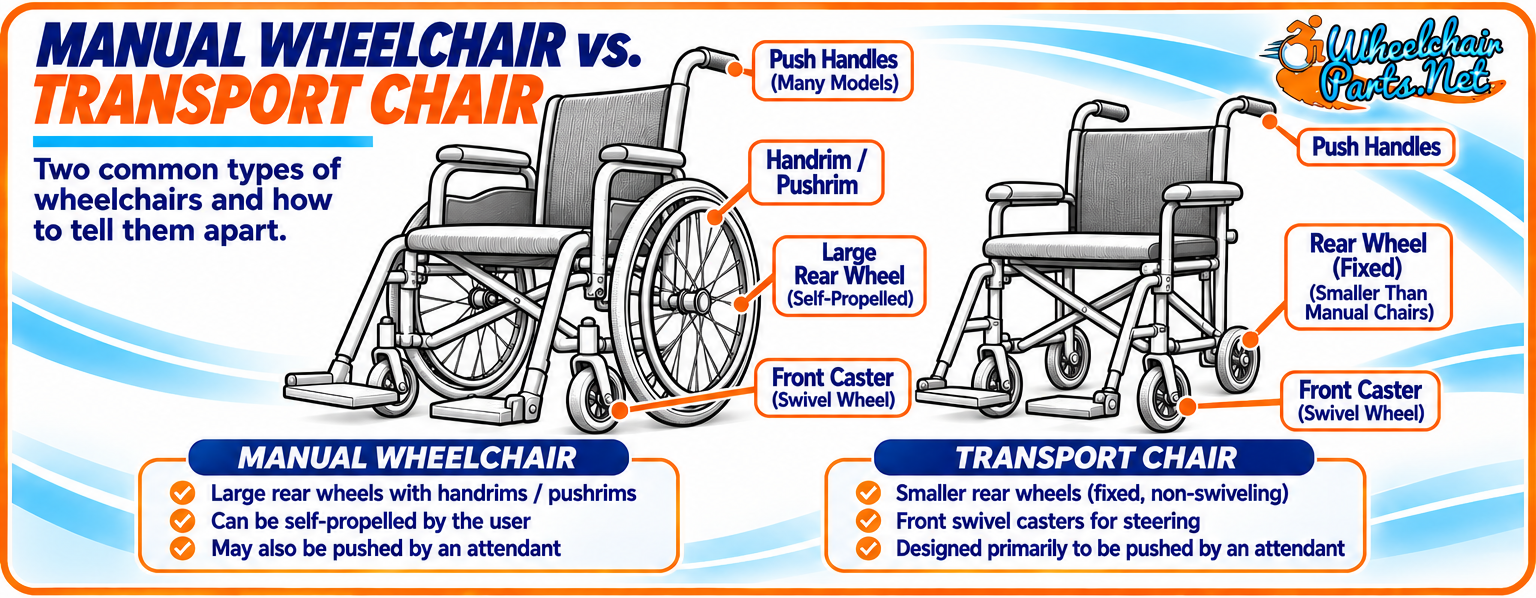
A manual wheelchair typically has large rear wheels with handrims, also called pushrims. These handrims allow the person sitting in the chair to propel and steer the wheelchair using their hands.
Many manual wheelchairs can also be pushed by an attendant using push handles located behind the backrest.
Common features of a manual wheelchair include:
- Large rear wheels
- Handrims / pushrims
- Smaller front casters
- Rear wheel locks
- Push handles on many models
- Removable or swing-away footrests or legrests on many standard models
Manual wheelchairs are available in many different designs, including standard, lightweight, ultralightweight, rigid, folding, and specialty configurations.
What Is a Transport Chair?
A transport chair is designed primarily to be pushed by another person.
Instead of the large rear wheels and handrims commonly found on a manual wheelchair, transport chairs usually have four smaller wheels. Because there are no large handrims to push, the person sitting in the chair generally cannot propel it in the same way as a standard manual wheelchair.
Common features of a transport chair include:
- Four smaller wheels
- No large handrims / pushrims
- Push handles for an attendant
- Compact folding frame on many models
- Footrests or legrests
- Attendant-operated braking or locking systems on some models
The Quickest Way to Tell the Difference
MANUAL WHEELCHAIR
Usually has large rear wheels with handrims / pushrims that allow the wheelchair user to propel the chair.
TRANSPORT CHAIR
Usually has four smaller wheels and is designed primarily to be pushed by an attendant.
If you are unsure, start by looking at the rear wheels. Large rear wheels with a separate handrim are one of the most recognizable features of a self-propelled manual wheelchair.
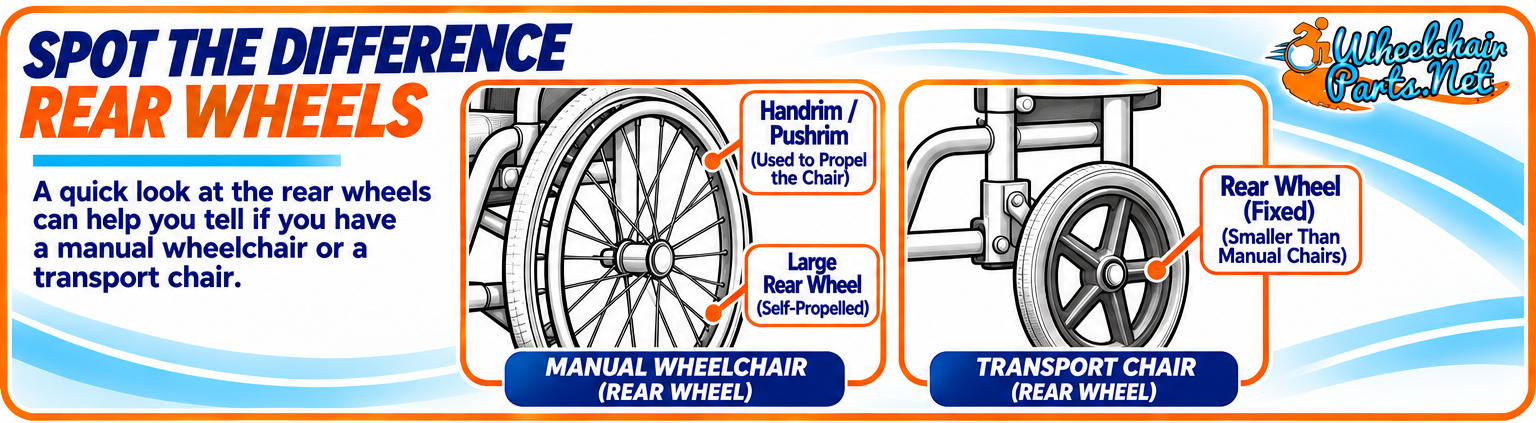
Rear Wheels
The rear wheel setup is one of the biggest differences between these two chair types.
A manual wheelchair typically uses large rear wheels that may include spokes or a molded mag-wheel design. A handrim / pushrim is mounted alongside the wheel so the wheelchair user can propel the chair.
A transport chair generally uses much smaller rear wheels without handrims. These wheels are designed to roll while an attendant pushes the chair from behind.
Wheel Locks and Braking Systems
Manual wheelchairs commonly use wheel locks positioned near the large rear wheels. These locks press against the tire to help keep the wheelchair stationary.
Transport chairs may use different locking or braking systems. Some have wheel locks near the rear wheels, while others may include attendant-operated brake levers near the push handles.
The exact system varies by manufacturer and model.
Size and Portability
Transport chairs are often designed with portability in mind. Their smaller wheels can make the chair lighter and more compact for transportation and storage.
Manual wheelchairs vary much more widely in size and weight. Some standard folding chairs are relatively heavy, while lightweight and ultralightweight models may use specialized frames and components to reduce overall weight.
Why Knowing the Difference Matters for Replacement Parts
Manual wheelchairs and transport chairs can use very different replacement parts even when the chairs look similar.
Differences may include:
- Rear wheels
- Casters
- Wheel bearings
- Axles and mounting hardware
- Wheel locks or braking components
- Footrests and legrests
- Armrests
- Upholstery
A replacement part designed for a standard manual wheelchair should not automatically be assumed to fit a transport chair, and vice versa.
Remember
Chair type is only the starting point. Always check the wheelchair manufacturer, model, measurements, mounting style, and original part specifications before choosing a replacement.
Quick Comparison
MANUAL WHEELCHAIR
- Large rear wheels
- Handrims / pushrims
- Can generally be self-propelled
- May also be pushed by an attendant
TRANSPORT CHAIR
- Four smaller wheels
- No large handrims / pushrims
- Designed primarily for attendant propulsion
- Often compact and easy to transport
Finding Replacement Parts
Once you know whether you have a manual wheelchair or transport chair, use the chair’s make, model, measurements, and original component specifications to narrow down compatible replacement parts.